
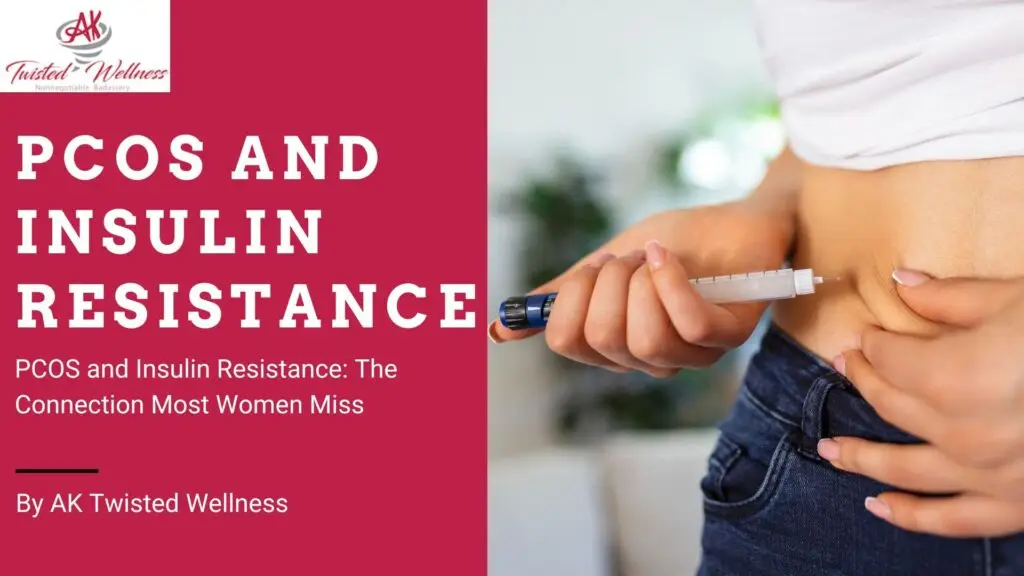
If you’ve been diagnosed with polycystic ovary syndrome (PCOS), you’ve probably heard plenty about irregular periods, elevated androgens, and ovarian cysts. If you’re still getting up to speed on the basics, our complete guide to understanding PCOS and hormone balance is a great place to start. But there’s one piece of the puzzle that often goes unaddressed in a standard 15-minute appointment ,and it may be the very reason your symptoms keep coming back.
That piece is insulin resistance.
PCOS affects between 5% and 21% of women of reproductive age worldwide, making it one of the most common endocrine disorders in women. Yet research published in 2025 confirms that insulin resistance remains the single most prevalent metabolic abnormality in women with PCOS ,estimated to affect anywhere from 35% to 80% of those diagnosed. Despite how central it is to the condition, many women leave their doctor’s office without ever having the word “insulin” mentioned.
This post is here to change that. Understanding the PCOS, insulin resistance connection isn’t just academic ,it’s the key to unlocking more effective, personalized care.
What Is Insulin Resistance, and Why Does It Matter for PCOS?
Insulin is a hormone produced by the pancreas that helps your cells absorb glucose (sugar) from your bloodstream. When cells stop responding to insulin efficiently ,a state called insulin resistance ,your pancreas compensates by producing even more insulin. The result is elevated insulin levels circulating throughout your body, a condition called hyperinsulinemia.
Here’s where PCOS enters the picture. Excess insulin doesn’t just affect blood sugar. It also stimulates the ovaries to produce more androgens (male hormones like testosterone). Higher androgen levels are directly responsible for many of the most frustrating PCOS symptoms, including:
- Irregular or absent periods ,insulin disrupts the hormonal signals that regulate your cycle
- Excess facial and body hair (hirsutism)
- Acne and oily skin
- Difficulty conceiving ,elevated androgens interfere with the key fertility hormones FSH and LH needed for ovulation
- Weight gain, especially around the abdomen
Research published in the Journal of Endocrinology in 2025 highlights that elevated insulin worsens nearly every dimension of PCOS pathophysiology ,from disrupting the hormonal signals that regulate ovulation to driving up androgen levels further. It’s a self-reinforcing cycle, and breaking it requires addressing insulin directly.
Why Insulin Resistance Is So Often Missed
So if insulin resistance is central to PCOS, why isn’t it caught sooner?
Several reasons. Standard blood panels typically measure fasting glucose, and many women with insulin resistance have perfectly normal glucose levels ,at least at first. The problem lies in how hard their pancreas is working to keep glucose in range. Unless a provider orders a fasting insulin level or calculates a HOMA-IR score (a mathematical ratio of insulin to glucose), the issue stays invisible.
Additionally, insulin resistance isn’t just a condition that affects women who are overweight. Research from Scientific Reports found that even normal-weight women with PCOS show signs of insulin resistance ,their HOMA-IR scores correlate with elevated androgen levels and hormonal disruption independent of body mass. This means thin women with PCOS are often dismissed when they raise concerns about metabolic symptoms.
If you’ve ever been told your labs “look fine” but you still feel exhausted, struggle to lose weight, or notice dark patches of skin (called acanthosis nigricans) on your neck or underarms, it may be worth asking your provider specifically about insulin testing.
The Long-Term Health Risks You Need to Know
Left unaddressed, insulin resistance in the context of PCOS isn’t just uncomfortable ,it’s a genuine long-term health risk.
Women with PCOS are approximately 2.5 times more likely to develop type 2 diabetes compared to women without the condition. They also face elevated risks of cardiovascular disease, non-alcoholic fatty liver disease, and high blood pressure. A 2025 global burden of disease analysis found that these metabolic complications are increasingly driving the overall health impact of PCOS worldwide.
The good news? Insulin resistance is modifiable. Unlike genetics, it responds to intervention ,and often dramatically so.
Practical Steps to Address Insulin Resistance With PCOS
You don’t have to wait for a specialist referral to start making a difference. Evidence-backed strategies include:
Dietary changes:
- Prioritize low-glycemic foods that cause slower, steadier rises in blood sugar (think legumes, non-starchy vegetables, whole grains, and lean proteins)
- Reduce ultra-processed carbohydrates and added sugars
- Include healthy fats like olive oil, avocado, and nuts, which support insulin sensitivity ,many of these same foods also support reproductive health; see our guide on how to improve egg quality naturally if fertility is a priority for you
Movement:
- Both aerobic exercise and strength training improve how cells respond to insulin
- Even a 20–30 minute walk after meals has been shown to meaningfully reduce post-meal glucose spikes
Sleep and stress:
- Poor sleep directly impairs insulin sensitivity; prioritize 7–9 hours
- Chronic stress elevates cortisol, which worsens insulin resistance ,stress management strategies like mindfulness and therapy are genuinely therapeutic, not just “nice to have”
Medications when appropriate:
- Metformin, an insulin-sensitizing medication, is commonly prescribed for PCOS and has strong evidence supporting its use in managing insulin resistance and improving ovulatory function
- Inositol supplements (particularly myo-inositol) have emerging evidence as a supportive option ,a 2025 position statement from the Society of Obstetricians and Gynaecologists of Canada reviewed their role in PCOS management
- GLP-1 receptor agonists (such as semaglutide/Ozempic or Wegovy) are increasingly being studied for insulin resistance and weight management in PCOS. If your provider mentions these, it helps to understand what to expect ,our guides on Ozempic side effects and timeline, managing nausea on Ozempic, preventing muscle loss on GLP-1 medications, and Wegovy side effects can help you have a more informed conversation
- Some women with PCOS also explore broader hormone replacement and hormonal therapy options ,understanding the full landscape of hormonal treatments is worth discussing with your provider
Always work with a qualified provider before starting or changing medications or supplements.
Getting the Right Testing and Advocacy Tips for Your Next Appointment
Advocating for comprehensive metabolic testing is one of the most important things you can do for your PCOS care. At your next appointment, consider asking for:
- Fasting insulin level (not just fasting glucose)
- HOMA-IR calculation to assess insulin resistance
- HbA1c (three-month average blood sugar)
- Full lipid panel (insulin resistance often affects cholesterol levels)
- Testosterone, DHEA-S, and SHBG to assess androgen levels ,understanding the difference between free testosterone and total testosterone is useful context here, and our normal testosterone levels by age chart can help you interpret your results
If your current provider dismisses these concerns, seeking a second opinion or care from an endocrinologist or integrative medicine specialist familiar with PCOS is a legitimate and empowering choice. Whole-person care means your metabolic health deserves as much attention as your reproductive health.
Conclusion: You Deserve Answers ,and a Plan
PCOS is not just a reproductive condition. It’s a metabolic one. And for too many women, the insulin resistance piece of the puzzle goes unrecognized for years ,leading to worsening symptoms, preventable complications, and the exhausting feeling that no one really understands what’s happening in their body.
The connection between PCOS and insulin resistance is well-established and, more importantly, actionable. With the right testing, a knowledgeable care team, and targeted lifestyle and medical strategies, meaningful improvement is possible.
You deserve providers who look at the whole picture. Don’t settle for anything less.
Frequently Asked Questions (FAQ)
Q1: Can I have insulin resistance with PCOS even if I’m not overweight?
Yes ,research confirms that normal-weight women with PCOS can and do experience insulin resistance. Weight is not a reliable indicator on its own. Specific insulin testing, rather than standard glucose tests alone, is the most reliable way to identify the condition.
Q2: Will treating insulin resistance improve my PCOS symptoms?
For many women, yes. Reducing insulin levels can lower androgen production, which may lead to more regular periods, reduced acne and hair growth, and improved fertility. Results vary by individual, but insulin management is considered a cornerstone of PCOS treatment.
Q3: Is metformin the only medication for insulin resistance with PCOS?
Metformin is the most commonly used option, but it isn’t the only one. Inositol supplements have growing evidence to support their use, and newer medications are being studied. Your provider can help determine what’s appropriate based on your symptoms, goals, and overall health.
Q4: Can PCOS insulin resistance lead to diabetes?
Yes. Women with PCOS have roughly 2.5 times the risk of developing type 2 diabetes compared to women without PCOS. This risk makes early identification and management of insulin resistance especially important.
Q5: How is insulin resistance tested?
The most accessible options in a clinical setting include fasting insulin levels combined with fasting glucose to calculate HOMA-IR. Some specialized settings use hyperinsulinemic-euglycemic clamps for research purposes, but HOMA-IR remains the practical standard for most patients.
Q6: Does diet really make a difference for PCOS and insulin resistance?
Research consistently shows that dietary changes ,particularly those reducing refined carbohydrates and emphasizing whole foods ,can significantly improve insulin sensitivity in women with PCOS. Even modest improvements in diet and physical activity can produce measurable metabolic benefits. For hormone-supportive food ideas, you may also find our post on foods that naturally support healthy hormone levels a helpful reference for understanding how nutrition affects the endocrine system broadly.
References
- Qi, Y.B., Yi, P., & Fu, X.H. (2025). Research progress on insulin resistance in polycystic ovary syndrome. Reproductive and Developmental Medicine, 9(2), 119–128. https://journals.lww.com/rdm/fulltext/2025/06000/research_progress_on_insulin_resistance_in.7.aspx
- Meng, Y., Zhao, T., Zhang, R., Zhu, X., Ma, C., & Shi, Q. (2025). Global burden of polycystic ovary syndrome among women of childbearing age, 1990–2021. Frontiers in Public Health. https://www.frontiersin.org/journals/public-health/articles/10.3389/fpubh.2025.1514250/full
- Journal of Endocrinology. (2025). Reappraising the relationship between hyperinsulinemia and insulin resistance in PCOS. Journal of Endocrinology, 265(2). https://joe.bioscientifica.com/view/journals/joe/265/2/JOE-24-0269.xml
- Nature/Scientific Reports. (2023). Risk factors for insulin resistance related to polycystic ovarian syndrome in Iranian population. Scientific Reports. https://www.nature.com/articles/s41598-023-37513-2
- Nature/Scientific Reports. (2025). Analysis of factors influencing polycystic ovary syndrome in women of reproductive age based on directed acyclic graphs. Scientific Reports. https://www.nature.com/articles/s41598-025-20980-0
- Society of Obstetricians and Gynaecologists of Canada (SOGC). (2025). PCOS Position Statement. https://sogc.org/common/Uploaded%20files/Position%20Statements/PCOS%20Position%20Statement_FINAL_02142025.pdf
- PMC/National Library of Medicine. (2022). Mapping research trends of insulin resistance in polycystic ovary syndrome from 2017 to 2021: A bibliometric analysis. Frontiers in Endocrinology. https://pmc.ncbi.nlm.nih.gov/articles/PMC9797656/
- Frontiers in Endocrinology. (2025). Prolactin, insulin resistance, and PCOS phenotypes. https://www.frontiersin.org/journals/endocrinology/articles/10.3389/fendo.2025.1674795/pdf
- Office on Women’s Health, U.S. Department of Health & Human Services. Polycystic ovary syndrome. https://www.womenshealth.gov/a-z-topics/polycystic-ovary-syndrome
- National Institute of Diabetes and Digestive and Kidney Diseases (NIDDK). Insulin Resistance & Prediabetes. https://www.niddk.nih.gov/health-information/diabetes/overview/what-is-diabetes/prediabetes-insulin-resistance
Disclaimer
This article is intended for informational and educational purposes only and does not constitute medical, legal, or financial advice. Reading this content does not create a patient-provider relationship. Individual health situations vary ,always consult a qualified healthcare professional before making changes to your treatment plan. For questions about Priority Medical Group services, visit https://aktw.life/.