
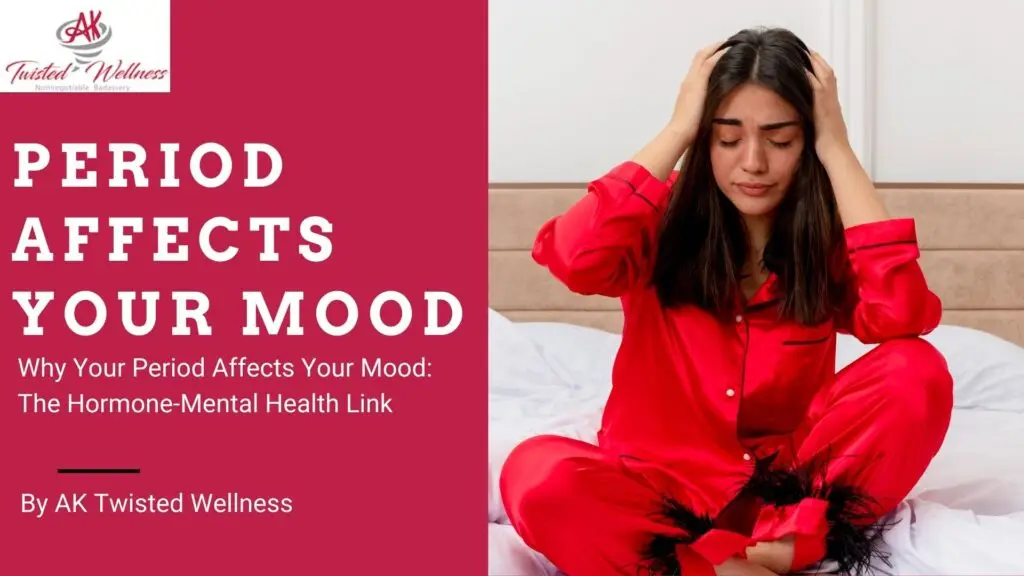
You snap at your partner, burst into tears over something small, or feel inexplicably anxious and then your period arrives and suddenly it all makes sense. Sound familiar? You’re not imagining it, and you’re far from alone. According to the U.S. Office on Women’s Health, 90% of women who menstruate experience at least some PMS symptoms, including mood changes. Yet many women spend years not understanding why their period affects their mood or assuming it’s just something to push through. It doesn’t have to be that way.
Understanding the hormone-mental health connection is one of the most empowering steps you can take for your wellbeing. Let’s break it all down.
The Four Phases of Your Cycle (and How They Shape Your Mind)
To understand why your period affects your mood, you first need to know that your menstrual cycle is not just a monthly bleed, it’s a dynamic hormonal rhythm with four distinct phases, each producing different emotional and cognitive effects.
Menstrual phase (Days 1-5): Estrogen and progesterone are at their lowest. Many women feel fatigued, withdrawn, or emotionally tender during this time.
Follicular phase (Days 6-14): Estrogen begins climbing. Most women notice improved energy, sharper focus, and a more positive mood often described as feeling most “like yourself.”
Ovulatory phase (around Day 14): Estrogen peaks. Confidence, social energy, and libido often hit their monthly high point.
Luteal phase (Days 15-28): After ovulation, progesterone rises and then both hormones drop sharply before menstruation. This hormonal plunge is the primary reason your period affects your mood and why PMS and PMDD symptoms emerge here.
To understand how these hormones fluctuate and what they mean, check out our in-depth guide on understanding your menstrual cycle for better health.
Why Hormones Have Such a Powerful Effect on Your Mind
The reason your period affects your mood so profoundly is this: sex hormones don’t just govern reproduction they directly influence your brain chemistry. Estrogen, progesterone, and their metabolites interact with the same neurotransmitter systems that regulate mood, anxiety, sleep, and stress.
Here’s how it works:
- Estrogen boosts serotonin, the neurotransmitter most associated with mood stability. When estrogen drops in the late luteal phase, serotonin activity can fall with it contributing to low mood, irritability, and anxiety.
- Progesterone metabolizes into allopregnanolone, a compound that interacts with GABA receptors (the brain’s natural calming system). In women sensitive to this shift, fluctuating progesterone can trigger anxiety, brain fog, and emotional dysregulation.
- Dopamine and endorphin levels also shift across the cycle, affecting motivation, energy, and your overall sense of reward.
When estrogen and progesterone plummet in the days before your period, your brain’s mood-regulating systems take a measurable hit. For some women this is mild; for others it’s debilitating. To go deeper on how these hormones work together, see our guide to fertility hormones explained: FSH, LH, estrogen, and more.
PMS vs PMDD: When Your Period Affects Your Mood More Than It Should
Not all premenstrual mood changes are equal and knowing the difference between PMS and PMDD matters for getting the right support.
Premenstrual Syndrome (PMS) affects an estimated 75% of menstruating women at some point in their lives. Symptoms typically include moodiness, irritability, bloating, fatigue, and sleep disturbance. They begin a few days to two weeks before menstruation and usually resolve within a couple of days once the period starts. For most women, PMS is uncomfortable but doesn’t derail daily functioning.
Premenstrual Dysphoric Disorder (PMDD) is the more severe end of the spectrum. Research shows PMDD affects 3–8% of women of reproductive age and is classified as a legitimate psychiatric mood disorder in the DSM-5. Key PMDD symptoms include:
- Severe depression or feelings of hopelessness
- Intense irritability or anger that strains relationships
- Overwhelming anxiety or tension
- Sudden crying spells or profound emotional sensitivity
- Difficulty concentrating and loss of interest in normal activities
- Physical symptoms like nausea, headaches, and joint pain
The critical distinction: PMDD doesn’t just make you feel off, it significantly impairs your ability to work, maintain relationships, and carry out daily life. Effective treatments exist, including SSRIs, hormonal therapy, and targeted lifestyle interventions. Please don’t wait years before seeking help.
Other Conditions That Worsen When Your Period Affects Your Mood
Even without PMDD, pre-existing mental health conditions can flare in predictable cyclical patterns. This is called premenstrual exacerbation (PME), and it’s more common than most people realize. Research published by the American Psychiatric Association found that roughly 60% of women with major depressive disorder or bipolar disorder report menstrual cycle-related mood worsening.
Conditions that frequently worsen in the luteal phase include depression, anxiety disorders, PTSD, and OCD. Tracking your cycle alongside your symptoms can reveal powerful patterns and give your provider critical information to adjust your care accordingly.
Women with PCOS face a compounded challenge, as androgen imbalances and insulin resistance can amplify hormone-driven mood disruption. Learn more in our post on PCOS and insulin resistance the connection most women miss and our complete PCOS and hormone balance guide. If you’ve noticed your period affects your mood more severely alongside irregular cycles or hair changes, our post on PCOS hair loss why it happens and how to stop it may also be relevant.
Practical Steps to Feel Better Throughout Your Cycle
Understanding why your period affects your mood is the foundation but here’s what you can act on today.
Track your cycle and symptoms. Use a period tracking app or a simple journal to log mood, energy, sleep, and anxiety daily. After 2-3 months, patterns become clear and that data is invaluable for both self-understanding and clinical conversations.
Prioritize sleep in your luteal phase. Progesterone fluctuations disrupt sleep architecture. Protecting 7-9 hours during the two weeks before your period directly supports mood stability.
Optimize nutrition. Complex carbohydrates help stabilize serotonin. Magnesium (found in leafy greens, nuts, and seeds) has research support for reducing PMS mood symptoms. Cutting back on caffeine and alcohol in the luteal phase can meaningfully dampen anxiety and irritability.
Move your body consistently. Exercise increases endorphins and serotonin across all cycle phases. Even 20-30 minutes of moderate movement has demonstrated effects on premenstrual mood symptoms.
Manage stress proactively. Chronic stress amplifies hormonal sensitivity. Mindfulness, breathwork, and consistent sleep schedules directly modulate the cortisol and neurotransmitter systems that interact with your reproductive hormones.
Talk to your provider. If your period affects your mood severely enough to disrupt work, relationships, or daily functioning, that’s clinical information not personal weakness. Treatments including SSRIs (even taken only in the luteal phase), hormonal therapies, and targeted supplementation can be genuinely life-changing.
If you’re entering perimenopause where these fluctuations become even more pronounced our posts on perimenopause vs menopause: how to tell the difference and HRT for women: benefits and risks are essential reading. If you suspect deeper hormonal imbalance, our guide on estrogen dominance: symptoms, causes, and natural fixes offers further context.
Conclusion: Your Hormones Are Talking It’s Time to Listen
The fact that your period affects your mood is not a flaw in your character or your psychology. It’s biology and biology that can be understood, tracked, and managed. Whether you’re dealing with mild monthly moodiness or the debilitating lows of PMDD, you deserve care that takes your full hormonal picture seriously.
Whole-person health means treating the mind and body as the integrated system they actually are. Your monthly cycle is one of the most powerful data streams your body produces. Learning to read it and getting the right support is one of the most important investments you can make in your long-term wellbeing.
Ready to take control of your hormonal health? Reach out to our team. We’re here to listen, investigate, and build a plan that actually fits your life.
Frequently Asked Questions (FAQ)
1. Why does my period affect my mood so dramatically? The sharp drop in estrogen and progesterone during the late luteal phase reduces serotonin and disrupts other brain chemicals that regulate mood. This is a physiological process not an emotional overreaction. Women with greater sensitivity to these hormonal shifts tend to experience more intense mood changes.
2. What’s the difference between PMS and PMDD? PMS involves common physical and emotional symptoms in the one to two weeks before menstruation that are uncomfortable but generally manageable. PMDD is a clinically recognized psychiatric disorder involving severe mood disturbance including extreme depression, rage, or hopelessness that meaningfully impairs daily life. If symptoms are disrupting your functioning, talk to a healthcare provider.
3. Can birth control help with period-related mood changes? For some women, hormonal contraceptives reduce cyclical mood fluctuations by stabilizing hormone levels. For others, certain formulations can worsen mood symptoms. The evidence is mixed, which is why discussing your specific symptom history with a knowledgeable provider is so important before making a decision.
4. Does diet affect how my period affects my mood? Yes, meaningfully. Magnesium, vitamin B6, omega-3 fatty acids, and adequate complex carbohydrates have demonstrated benefits for PMS and PMDD symptoms. Reducing sugar, alcohol, and caffeine particularly in the two weeks before your period can also significantly reduce mood and anxiety symptoms.
5. When should I seek medical help for period-related mood changes? If your mood changes are severe enough to affect work performance, relationships, or your ability to carry out daily activities, it’s time to seek help. You should also speak with a provider immediately if symptoms include thoughts of self-harm. PMDD and premenstrual exacerbation are treatable no one should suffer through this in silence.
6. Can hormonal imbalances beyond the monthly cycle affect mood? Absolutely. Conditions like PCOS, thyroid disorders, perimenopause, and estrogen dominance can all produce significant mood disruption beyond typical cyclical patterns. If you’re experiencing persistent mood problems that don’t follow your cycle clearly, a comprehensive hormone panel can provide crucial answers.
References
- U.S. Office on Women’s Health, Dept. of Health and Human Services. (2024). Reproductive Health and Mental Health. https://womenshealth.gov/mental-health/living-mental-health-condition/reproductive-health-and-mental-health
- American Psychiatric Association. (2024). The Menstrual Cycle and Mental Health. https://www.psychiatry.org/news-room/apa-blogs/the-menstrual-cycle-and-mental-health-concerns
- MDPI Blog. (2024). Understanding Women’s Mental Health Across the Menstrual Cycle. https://blog.mdpi.com/2024/01/23/mental-health-across-the-menstrual-cycle/
- National Institutes of Health / PubMed Central. (2022). Psychiatric Symptoms Across the Menstrual Cycle in Adult Women: A Comprehensive Review. https://pmc.ncbi.nlm.nih.gov/articles/PMC8906247/
- Taylor & Francis. (2025). Mental Health and the Menstrual Cycle: Practitioner Attitudes, Confidence, and Practice. https://www.tandfonline.com/doi/full/10.1080/02703149.2025.2459956
- BIO Web of Conferences. (2024). Menstrual Cycle Effects on Mental Health Outcomes: An Ethnographic Study. https://www.bio-conferences.org/articles/bioconf/abs/2024/05/bioconf_rtbs2024_01011/bioconf_rtbs2024_01011.html
- SIU Medicine. (2024). Can My Menstrual Cycle Affect My Mental Health? https://www.siumed.org/blog/can-my-menstrual-cycle-affect-my-mental-health
- Springer Nature / Advances in Therapy. (2025). Menopause and Mental Health. https://link.springer.com/article/10.1007/s12325-025-03427-w
- National Institute of Mental Health. (2024). Women and Mental Health. https://www.nimh.nih.gov/health/topics/women-and-mental-health
- American Psychological Association. (2024). How Hormones and the Menstrual Cycle Affect Mental Health. https://www.apa.org/news/podcasts/speaking-of-psychology/menstrual-cycle
Disclaimer
This blog post is provided for informational and educational purposes only. It does not constitute medical, psychological, legal, or financial advice and does not create a patient-provider relationship. Individual health situations vary; always consult a qualified healthcare professional before making any medical decisions. If you or someone you know is experiencing a mental health crisis, please contact the 988 Suicide & Crisis Lifeline by calling or texting 988.
For questions about our services, visit https://aktw.life/